
Picture book
Children's book publishing
The least forgiving format in publishing, and our deepest specialism.
Thirty-two pages. A character who must look like themselves on every spread. Text that has to survive being read aloud a hundred times. Colour that has to hold through a print run. Children's books are hard to make well, and that is precisely why we like making them.
Plan in spreads
Children do not experience pages. They experience turns.
A child sees two facing pages at once, then turns. Planning in spreads rather than pages is the single change that most improves a first picture book.
- One clear beat per spread. Two beats makes the turn feel arbitrary.
- Put the turn where the question is — it is the only suspense device a picture book has.
- Read the text aloud against a blank dummy. Any spread with no reason to be looked at will be skipped.
- Leave the illustration room to say things the text does not. The best picture books are not narrated twice.
Signature arithmetic
Standard length
32 pages — two folded signatures of sixteen
After front matter
Usually 24–28 pages of story
Typical spreads
12–14, settled at storyboard stage
Other efficient lengths
40 and 48 pages, common for older picture books
What we cover
Everything a children's book needs, from first line to library shelf.
Story development
Picture book text is closer to poetry than prose. We work on economy, rhythm, and the read-aloud quality that decides whether a book survives its fiftieth outing.
Editing for young readers
Vocabulary and sentence length set against reading level, with the pacing checked against where each page turn falls.
Character development
A character has to be recognisable on every spread and worth meeting again. Design starts with reference sheets, not a single drawing.
Illustration
Style exploration, character sheets, a full storyboard, then finished colour artwork at print resolution.
Page layout
Text placed to work with the artwork rather than sit on top of it, with room for the eye to move across the spread.
Typography
Type sized and spaced for new readers, with letterforms chosen for legibility rather than decoration.
Print formatting
Signature arithmetic, trim, bleed and gutter allowance planned so nothing important disappears into the spine.
eBook preparation
Fixed-layout digital editions that keep artwork and text in the positions they were designed for.
Publishing
Identifiers, metadata and title records built for a category where age range and reading level matter to buyers.
Distribution
Retail, wholesale and library channels — libraries and schools matter more in this category than in almost any other.
Marketing
Reaching the adults who buy children's books: parents, teachers, librarians and gift buyers, each of whom decides differently.
Illustration route
Nothing finished is drawn until the storyboard is right.
Changing a rough is cheap. Changing a finished colour spread is not. So the sequence is deliberately front-loaded with planning.
Style samples
Two or three visual directions, sampled on a scene from your actual book.
Character sheets
Lead and supporting characters drawn from several angles and moods, and approved.
Storyboard
Every spread roughed out — composition, pacing, text placement and page turns.
Final artwork
Spreads illustrated and coloured at print resolution, with bleed and gutter accounted for.
Children's book portfolio
Children's titles from our portfolio.
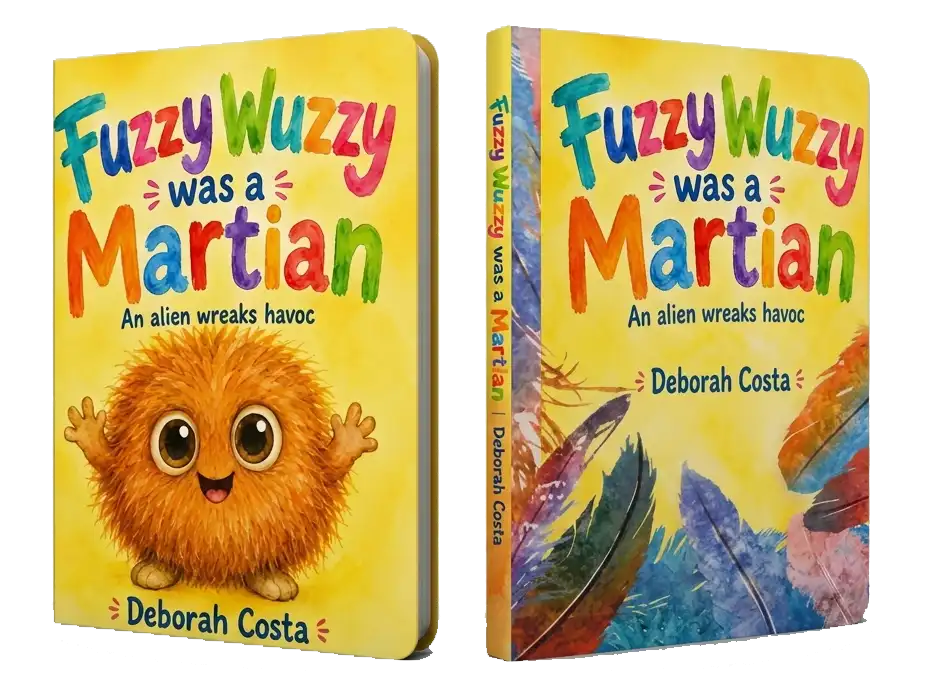
Covers from children's titles in our portfolio, across picture books, illustrated non-fiction and books for young readers.
Illustrated non-fiction
Children's illustrated atlas
Young readers
Young reader title
Print matters more here
Children's books get handled hard.
A picture book is a physical object before it is a story. Board thickness, paper weight, lamination, binding strength and colour fidelity all affect whether a book survives its first year in a family.
- Paper weight specified for opacity and durability, not just cost per sheet.
- Binding chosen for how the book will actually be used — read flat, held open, carried around.
- Colour proofed before a run, because screen colour and press colour are not the same thing.
- Gutter allowance planned so faces and text never disappear into the spine.
- Lamination and finish chosen for handling, and for how the cover looks under shop lighting.
Questions
Children's book questions
It comes from printing rather than storytelling. Sheets are folded into groups of sixteen pages, so 32 and 48 are efficient and anything in between wastes paper. After front matter, a 32-page book usually leaves 24 to 28 pages of story.
No. We handle illustration in house, starting with style samples so you can choose a direction before committing. If you already have an illustrator you want to work with, we can build around that.
That is set in writing before artwork begins — which formats, which territories, and whether characters can be reused in a sequel or on merchandise. Get this clear early; it is much harder to renegotiate later.
Usually not, because the illustrations carry the story. Chapter books, early readers and middle grade work well in audio and often perform strongly.
Per-copy colour printing is expensive, which is why illustrated books are the clearest case for an offset run. We quote both routes so you can see the crossover point rather than guess at it.